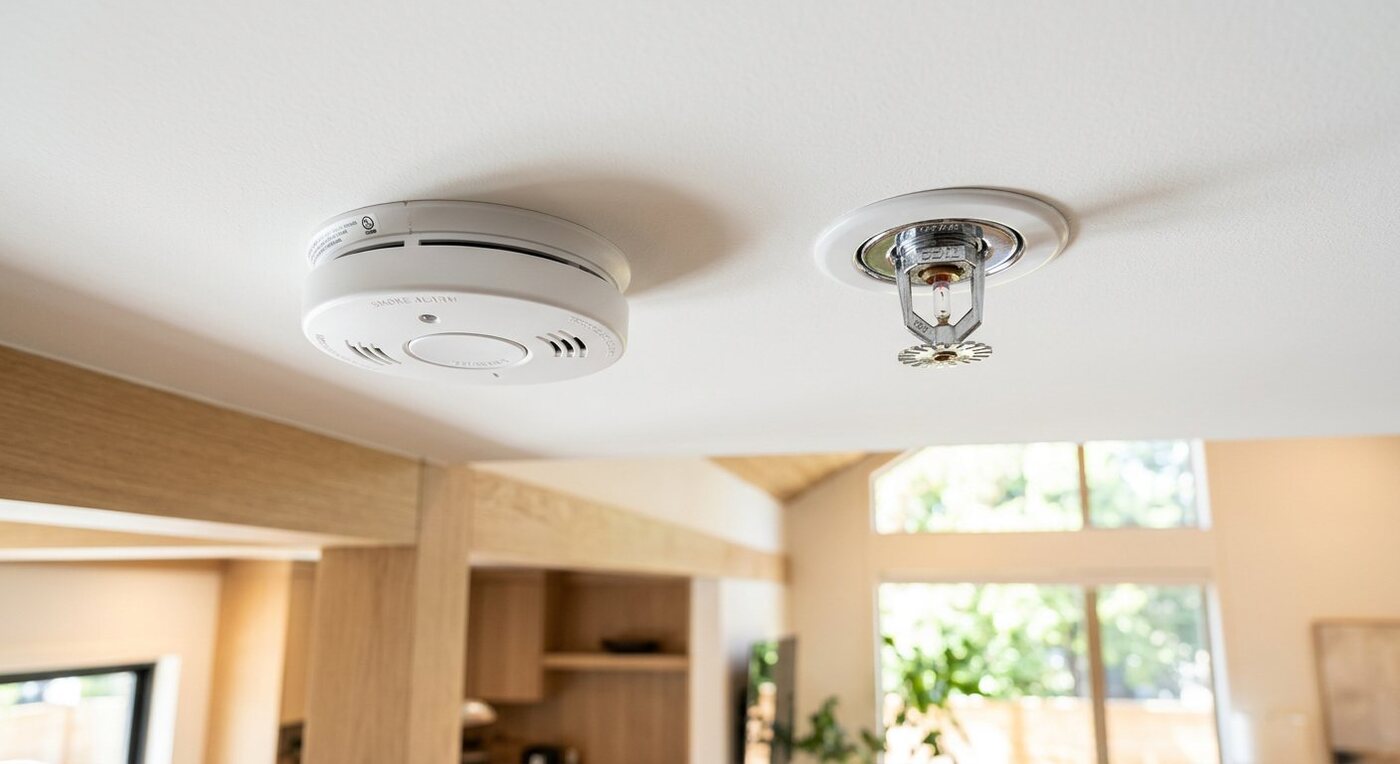
Home safety is rarely about dramatic fixes. It is about small checks done consistently, before the season that stresses your home the most arrives. Most of this checklist needs no tools and takes one slow walk through the house.
Detection: the part everyone forgets to test
Smoke and carbon monoxide alarms are the least glamorous purchase in any renovation and the only one that can save a life. Test them, and treat their warnings seriously rather than blaming the toast.
- Press the test button on every alarm and confirm everyone can hear it from a closed bedroom door.
- Replace backup batteries on a fixed seasonal schedule, not when the chirping starts.
- Check the manufacture date on the back of each unit; sensors degrade with age even when they still beep.
- Keep alarms clear of paint, dust, and obstructions after any decorating work.
Escape routes and household drills
An escape plan is only real if it has been walked. Choose a meeting point outside the house, then practice the route in the dark, at least once, with everyone in the household.
Points that matter most
- Windows in bedrooms must open easily — test them, including any that have been painted shut.
- Keep stairs, hallways, and landings free of boxes, shoes, and furniture that becomes a trip hazard in smoke.
- Show every adult where the gas shut-off and electrical panel live, and how to isolate them.
- Place extinguishers near exits and kitchens, never behind the fire they may need to fight.
Nobody performs a new skill in an emergency. Familiarity is the whole point of a drill.
Electrical load and heating season
Older homes quietly accumulate more load than their wiring was designed for: space heaters, chargers, kitchen gadgets, and now vehicle chargers. Before cold weather, walk the house with a critical eye.
- Look for warm plugs, discoloured outlet covers, or a faint burning smell — call an electrician.
- Replace damaged cords instead of taping them, and avoid daisy-chained extension leads.
- Keep portable heaters a safe distance from curtains, bedding, and upholstery.
- Have the furnace, fireplace, and chimney serviced before the first cold snap.
Water, weather, and the costly quiet failures
Water damage rarely announces itself. Seasonal checks catch it while it is still a stain rather than a claim.
- Inspect under sinks, around toilets, and near water heaters for slow seepage.
- Clear gutters and downspouts so water leaves the roof and the foundation.
- Check exterior drainage away from the house, and confirm the ground slopes away rather than toward it.
- Look at ceilings and attic sheathing after heavy rain for staining or soft spots.
Security as layers, not a single device
Good home security is layered: deterrence, detection, and delay. No single gadget replaces the others, and the best setup is the one your household will actually keep armed.
- Deterrence — lighting on timers, tidy landscaping that removes hiding spots, visible signage.
- Detection — door and window sensors, motion sensing, cameras covering approaches rather than faces.
- Delay — quality deadbolts, reinforced strike plates, and locks on the doors and windows you use least.
Review camera sightlines after any garden or exterior work. New growth, a new shed, or a new fence can quietly blind a system that used to see everything.
Make it a seasonal routine
Pair the checks with a marker in the calendar: when clocks change, when the first frost is forecast, when the first hot weekend arrives. A checklist you repeat is worth more than one you complete perfectly once.
What to do when a check finds a problem
Some findings are a weekend fix. Others — wiring, gas appliances, suppression systems, structural water damage, or anything the checklist below flags repeatedly — should go to a licensed specialist, and should be dealt with before you spend on cosmetic work nearby.
- Water where it should not be, or any active leak.
- Alarms that fail to test, or that trigger repeatedly without a cause.
- Warm outlets, flickering circuits, or a panel that trips often.
- Doors and windows that no longer latch or lock properly.
If you would rather not diagnose it yourself, send us a note. We inspect homes for exactly this reason and will tell you what genuinely needs attention first.