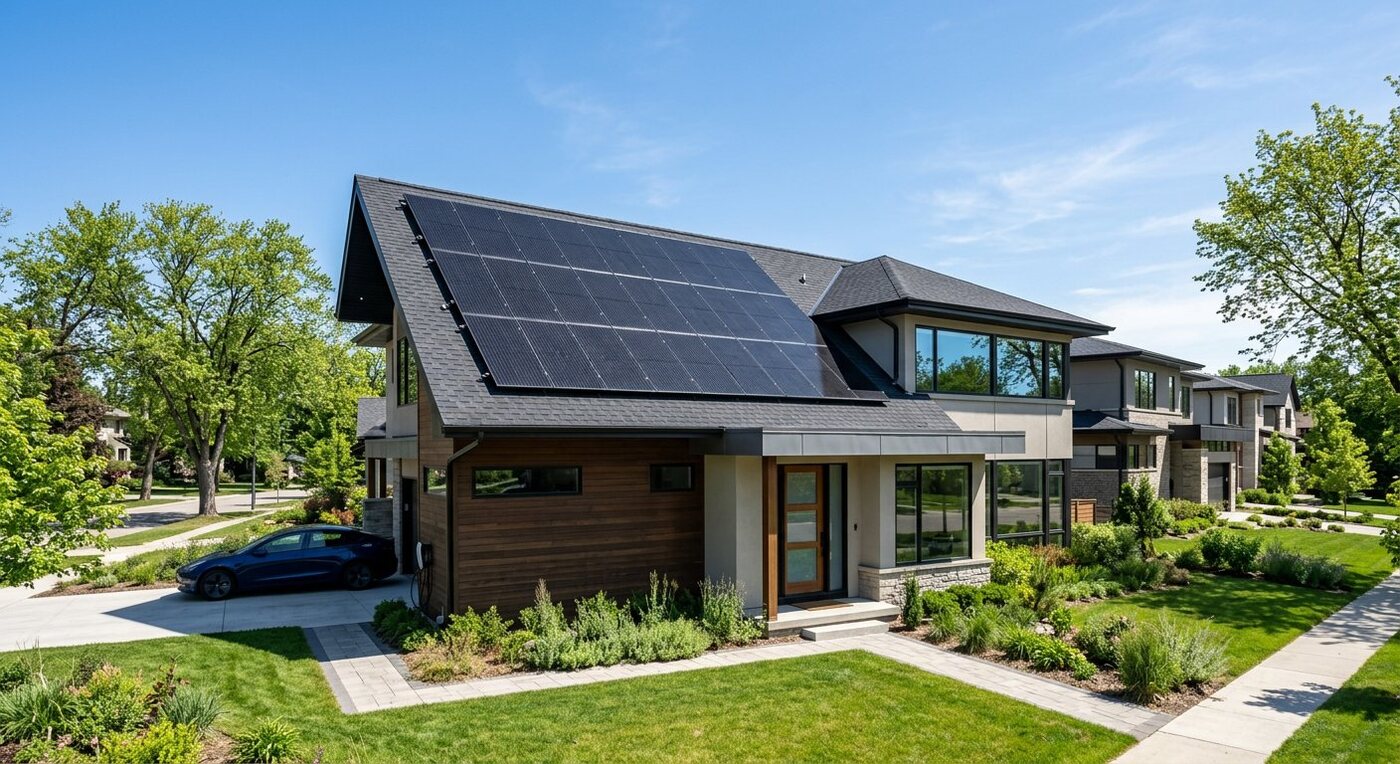
Solar and roofing are two of the most common upgrades homeowners consider together — and the pair where sequencing mistakes cost the most. Panels are mounted through the roof, over flashing and roof decking. If that roof is near the end of its service life, every panel becomes an obstacle the day a repair is needed.
Assess the roof before the array, every time
Before any solar proposal is worth reading, the roof itself needs an honest assessment: remaining service life, the condition of the decking and underlayment, the state of flashing around chimneys and vents, and whether ventilation is adequate.
- If the roof has years of reliable life ahead, plan the solar installation and protect the warranty terms.
- If the roof is close to replacement, replace it first — then mount the array on a surface you trust.
- If only a section is failing, discuss whether a partial re-roof makes sense, or whether a full re-roof is the better long-term value.
Why the order of work is not negotiable
Removing and reinstalling an array later is not a small job. Panels must be disconnected, lifted, stored safely, the mounting hardware removed, the roof repaired or replaced, then the whole system reinstalled and recommissioned. It is slower, more disruptive, and considerably more expensive than doing it in the right order once.
Mount solar on a roof you intend to keep. Keep a roof you intend to mount solar on.
Fix the details that make a roof last
Three details decide whether a roof and an array age well together.
Flashing and penetration sealing
Every mount point is a penetration. Correctly flashed, sealed mounts are reliable for the life of the roof. Rushed ones leak within a few seasons, usually in a spot you cannot see.
Ventilation
Attic heat shortens the life of roofing materials. Balanced intake and exhaust ventilation keeps the deck cooler and helps the panels perform in more consistent conditions.
Drainage and debris
Panels shed water and can concentrate flow. Gutters, downspouts, and edge detailing should be checked so water leaves the roof properly, especially before a Colorado spring.
Choose equipment to match the roof, not the other way around
Roof pitch, orientation, shading, and the age of your electrical panel all shape what makes sense: panel type, inverter choice, mounting system, and whether battery storage is worth adding.
A battery is a question about evenings, not about panels
If your household uses most of its power in the evening, storage changes how much of your own production you actually consume. If you are mostly home during the day, the numbers can look different. Ask for an explanation of your household pattern rather than a generic pitch.
Where warranty documents belong
Roofing warranties, mounting hardware warranties, panel performance guarantees, and inverter coverage are separate documents from separate manufacturers. If the roof is ever repaired, you will need to show that the work did not void the coverage.
This is exactly the kind of paperwork that Home Path Living collects during a project — registered, filed, and handed to you in one pack, so a future repair is a phone call instead of an archaeology exercise.
The short version
- Inspect the roof before signing anything solar-related.
- Replace a roof that is near the end of its life; mount on one that is not.
- Insist on correctly flashed penetrations and proper attic ventilation.
- Match panels, inverter, and storage to your household's daily pattern.
- Keep every warranty document together, in writing, from day one.